
Establishing a Technical Vision? DORA Can Help.

This is the beginning of a series of blog posts on cloud software practices. If you would like to discuss these topics, please feel free to reach out to me.
The work conducted by Google and DevOps Research and Assessment (DORA) in software is similar to what was done by systems engineering in the previous century for manufacturing. DORA’s focus is on systematically identifying the critical parameters or key performance indicators (KPIs) that need to be monitored in software engineering processes. The goal is to consistently achieve high levels of accomplishment and customer satisfaction. To learn more about DORA see: https://dora.dev/
Determining what is essential for your development processes and ensuring quality and consistency in software delivery is challenging. That’s where Critical Parameter Management (CPM) comes in. CPM is an engineering practice that aims to understand and maintain the robustness of a system by employing detailed design and appropriate controls. By examining the key elements that drive your process, critical parameters are derived. DORA has very effectively applied these concepts to many development teams, to determine statistically, the critical few parameters that drive velocity and effectiveness in software development.
DORA labels the research on practices that contribute to improved software delivery and operational performance (SDO). But if you are familiar with the concepts of CPM and KPIs, it is analogous.
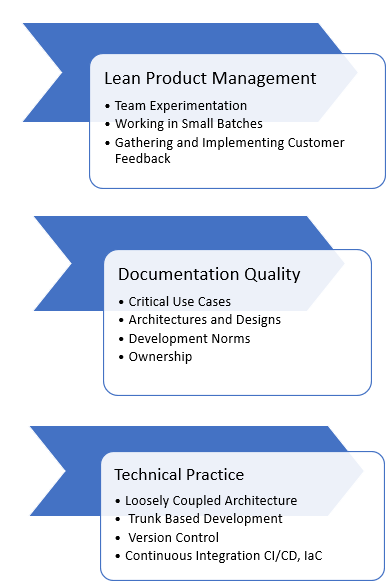
From a SDO and CPM perspective, the following diagram was created thinking about software and leadership in a more effective way. The most surprising observation for many based on DORA’s research is the huge impact that proper documentation of use cases, architecture, design, and development norms has on engineering velocity and quality, more on this in the part 2.
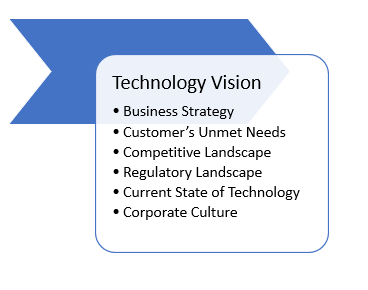
Building high-performing teams starts with establishing a clear vision. However, it’s crucial to understand that the technology roadmap is heavily influenced by company culture. Therefore, any changes in engineering processes and culture require executive sponsorship. Without proper support, there won’t be a unified corporate effort to execute these changes.
In addition to executive sponsorship, several other activities focus on strategic areas, directing energy towards the most promising pathways for successful and innovative solutions. These activities consider the competitive and regulatory landscapes, as well as the current state of technology, which set the boundaries for design. This is part of the ‘bounded context’. It involves both adhering to standards like ISO-27K, SOC2 Type 2, PHI, PII, GDPR, etc. and avoiding actions that infringe on competitor patents or copyrights.
The current state of technology sets the foundation for our baseline architecture and establishes the cultural expectations. It serves as the starting point, the base line for the technology roadmap, identifying areas for growth and aiming to achieve some quick wins.
Collectively, these factors define the playing field for innovation. They provide insights into where we currently stand and establish the rules of engagement. Ultimately, we can align our technology vision with the business strategy, paving the way to a future state that fills the unmet needs of our customers.
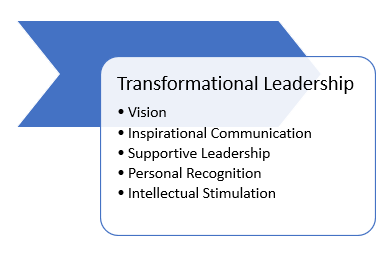
In the next part of this series, we will delve into transformational leadership within the DORA strategy.
Parts three, four and five in this series covers the operational implications of DORA SDO, CPM, KPI driven technical leadership.
 A Social CTO Blog
Leave a comment